Bamboo: A Playful Font for Vintage Vibes
There’s something oddly satisfying about opening a brand board and seeing a blank canvas. It’s a moment of potential, a chance to shape identity from nothing. That’s exactly what happened when I first tested Bamboo on a boutique logo concept. The font didn’t just fit—it felt like it had been waiting for this project.
A Retro Twist with a Modern Soul
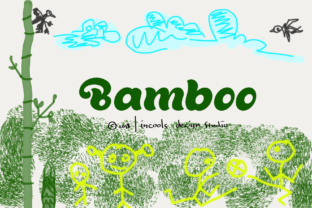
Bamboo is a playful, wavy font with a fun natural flow. Its bold rounded letters give it a friendly exterior, but there’s also a subtle retro sixties vibe that makes it stand out. It’s not just another script font; it’s a character in its own right. The curves are loose and inviting, almost like the font is dancing across the page. This personality makes Bamboo feel more like a hand-drawn signature than a digital typeface.
When I first saw Bamboo, I thought it might be too whimsical for a serious brand. But as I tested it on a café visual refresh, I realized it could work in surprising ways. The font’s wavy nature adds movement to static designs, which is especially useful for social media graphics or website headers where dynamism is key.
Testing Bamboo in Real Design Projects
I used Bamboo on a logo draft for a local bakery. The rounded forms worked well with the brand’s warm, approachable image. It paired nicely with a sans serif body text, creating a balance between playfulness and professionalism. On a packaging mockup, the font stood out against the background without overwhelming the design. It was clear, legible, and added just the right amount of charm.
One of the most interesting uses I found was in a creative studio identity. The font’s retro feel gave the brand a nostalgic edge, while still feeling modern enough to appeal to a younger audience. It worked particularly well on business cards and flyers, where a bit of character can make all the difference.
However, Bamboo isn’t always the best choice. For long body text or formal corporate use, it can feel too casual. I’ve seen it struggle in small sizes, where the curves become less defined and readability drops. That said, it’s still worth testing in those scenarios—especially if you’re looking for a subtle nod to vintage style without sacrificing clarity.
Font Pairing and Practical Tips
When pairing Bamboo with other fonts, I recommend keeping things balanced. A clean sans serif like Montserrat or Lato works well as a body text, providing contrast and structure. If you want to go more vintage, try pairing it with a serif font like Cinzel or Playfair Display for a classic feel.
For web design, Bamboo performs reasonably well in headers and call-to-action buttons. However, it’s not ideal for long paragraphs or menus. Always test it at different sizes and on various backgrounds to ensure it remains legible. Also, check the font’s licensing before using it in client work, especially if you’re planning to use it in print-on-demand products or digital templates.
Bamboo comes with a few alternates and ligatures, which can add variety to your designs. These features are great for adding flair to headlines or short phrases without overcomplicating the layout. If you’re working on a brand identity system, consider how these variations can enhance your visual language.
When to Use Bamboo and When to Avoid It
Bamboo is best used as a display font, headline font, or accent font. It shines in logos, social media graphics, and packaging labels where personality and visual interest are important. It’s also a good fit for editorial design, posters, and flyers where a bit of whimsy can elevate the overall look.
That said, it’s not the best choice for long body text, small sizes, or formal settings. If you’re designing a corporate website or a professional brochure, you’ll want to pair it with a more structured font. It’s also worth noting that Bamboo may not support all languages, so always verify compatibility before finalizing your design.
Ultimately, Bamboo is a versatile font with a unique personality. It’s not for everyone, but if you’re looking for a playful, retro-inspired typeface that adds character to your brand, it’s definitely worth considering. Just remember to test it thoroughly and pair it wisely.